

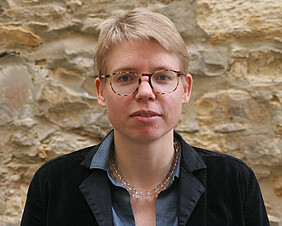
(c) Elżbieta Janicka
17. December 2025
In the current issue of Studia Litteraria et Historica No. 13 (2024): Nation at the Frontier, Katrin Stoll has published the article “Poland’s last Jews” or the Last of the Left Polish-style? On David Kowalski’s Book “Polens letzte Juden: Herkunft und Dissidenz um 1968” (DOI: https://doi.org/10.11649/slh.3336 ).
Studia Litteraria et Historica is a peer-reviewed academic journal published annually by the Institute of Slavic Studies of the Polish Academy of Sciences. It serves as a multidisciplinary platform connecting ethnography, sociology, literary studies, and history, and features research on public discourse, politics of history and memory, ideology, and the coexistence of minority and majority groups in society. The journal is published in open access.
In her article, Katrin Stoll examines David Kowalski’s book Polens letzte Juden: Herkunft und Dissidenz um 1968 by analysing its central argument and methodology. Kowalski’s work investigates the relationship between social milieu and oppositional activism among students in Poland around the protests of 1968, focusing particularly on the group known as the Club of the Seekers of Contradictions, which included key figures such as Adam Michnik and Jan Tomasz Gross. Many members of this circle came from families of Jewish origin yet identified primarily as Polish patriots and Communists. Kowalski argues that their participation in the protests represents, as he puts it, “the last revolt of Jewish hope in communism”, linking their political engagement to their socio-cultural backgrounds. Stoll explores how Kowalski constructs his argument based on archival materials and interviews (including with some of the participants), and situates it in broader debates about identity, political activism, and the meaning of Jewish descent in post-war Poland.
The current article is the result of Katrin Stoll’s long-standing cooperation with colleagues at the Instytut Slawistyki PAN in Warsaw, reflecting deep scholarly exchange between German and Polish research environments.